


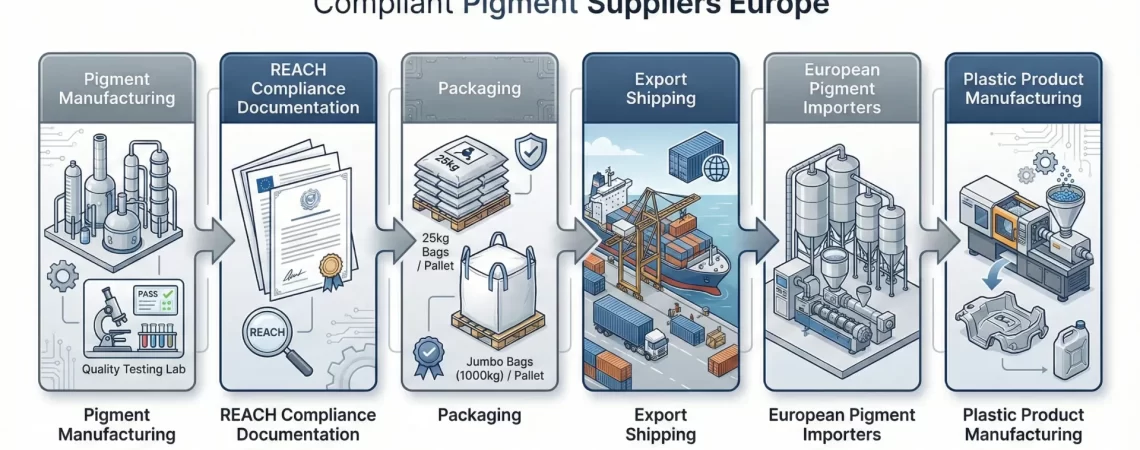
Pigments for plastics industry Europe must be REACH compliant, color-consistent, thermally stable, and supplied by reliable global exporters who understand European pigment importers’ regulatory and quality expectations.
For manufacturers and European pigment importers, pigment selection is not only about shade. It involves compliance with EU regulations, dispersion quality, processing stability, documentation, and supply reliability. This guide explains how pigments for plastics industry Europe are evaluated, how to choose a pigment dispersions supplier Europe, and what REACH compliant pigment suppliers Europe must provide.
Understanding Pigments for Plastics Industry Europe
The plastics sector in Europe is highly regulated and technically demanding. Pigments for plastics industry Europe are used in:
- Injection molding
- Blow molding
- Extrusion
- Compounding
- Masterbatch production
Applications include:
- Packaging films
- Automotive components
- Consumer goods
- Pipes and fittings
- Electrical housings
- Industrial molded parts
European pigment importers typically evaluate pigments based on:
- Heat stability
- Lightfastness
- Migration resistance
- Chemical resistance
- Regulatory compliance
- Batch-to-batch consistency
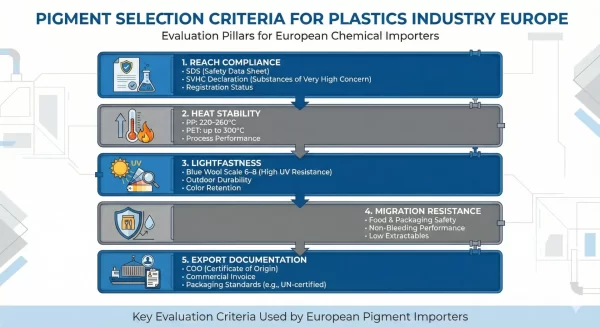
For thermoplastics like PP, PE, PVC, ABS, and PET, pigments must withstand processing temperatures between 180°C and 300°C without degradation or shade shift.
Regulatory Requirements in Europe: Why REACH Matters
One of the most critical selection criteria for pigments for plastics industry Europe is compliance with REACH Regulation (Registration, Evaluation, Authorisation and Restriction of Chemicals).
What REACH Compliant Pigment Suppliers Europe Must Provide
REACH compliant pigment suppliers Europe must ensure:
- Substances are registered (if applicable)
- No restricted substances are present above limits
- Safety Data Sheets (SDS) are updated as per EU format
- SVHC (Substances of Very High Concern) declarations
- Traceability documentation
European pigment importers require documentation transparency because non-compliance can lead to:
- Customs rejection
- Product recall
- Financial penalties
- Brand liability
Therefore, global exporters targeting Europe must position themselves as REACH compliant pigment suppliers Europe with clear compliance statements.
Types of Pigments Used in European Plastics Manufacturing
Pigments for plastics industry Europe are broadly categorized as:
1. Inorganic Pigments
Common inorganic pigments include:
- Iron oxides
- Chromium oxides
- Titanium dioxide
- Ultramarine blue
Inorganic pigments are preferred for:
- High heat stability
- Outdoor durability
- UV resistance
- Cost-effective bulk coloring
2. Organic Pigments
Organic pigments offer:
- Brighter shades
- Higher tinting strength
- Cleaner tones
They are used where high chroma is required, such as packaging and consumer goods.
European pigment importers often balance inorganic and organic pigments depending on the performance requirement.
Role of Pigment Dispersions Supplier Europe
Many European masterbatch producers prefer ready-to-use dispersions instead of dry powders. A pigment dispersions supplier Europe provides:
- Pre-dispersed pigments
- Liquid pigment systems
- Customized dispersion strength
- Controlled particle size
Why Dispersions Matter
Advantages of working with a pigment dispersions supplier Europe include:
- Improved color consistency
- Reduced dust handling
- Faster processing
- Lower dispersion energy
- Improved surface finish
European pigment importers working in coatings and liquid systems particularly prioritize dispersion quality.
Technical Parameters for Pigments for Plastics Industry Europe
When selecting pigments for plastics industry Europe, technical buyers evaluate:
Heat Stability
Pigments must resist degradation during processing:
- PP: 220–260°C
- PET: up to 300°C
- PVC: ~180–200°C
Poor heat stability causes:
- Shade variation
- Black specks
- Decomposition
Lightfastness
Measured on the Blue Wool Scale (1–8), most European outdoor applications require:
- Minimum rating: 6–8
Migration Resistance
Pigments must not bleed into:
- Adjacent materials
- Plasticizers
- Food-contact layers
Particle Size & Dispersion
Fine particle size ensures:
- Smooth surface finish
- Uniform color
- High tinting strength
Expectations of European Pigment Importers
European pigment importers typically require:
- REACH compliance confirmation
- Technical Data Sheet (TDS)
- Safety Data Sheet (SDS)
- Sample testing support
- Stable export packaging
- Reliable supply chain
Importers also evaluate:
- Manufacturing experience
- Production capacity
- Quality control systems
- Export documentation
To serve pigments for plastics industry Europe effectively, suppliers must demonstrate technical expertise—not just competitive pricing.
Packaging & Export Requirements
For pigments for plastics industry Europe, packaging standards are critical.
Common packaging formats:
- 25 kg HDPE bags
- 25 kg paper bags with liner
- Jumbo bags (500–1000 kg)
- Palletized shrink-wrapped units
Export documentation required by European pigment importers:
- Commercial Invoice
- Packing List
- Certificate of Origin
- Bill of Lading
- REACH declaration
Suppliers positioning as REACH compliant pigment suppliers Europe must integrate compliance into export documentation.
How to Choose a Reliable Pigment Dispersions Supplier Europe
When evaluating a pigment dispersions supplier Europe, buyers assess:
1. Technical Capability
- In-house dispersion technology
- Quality testing laboratory
- Shade matching facility
2. Compliance Strength
- REACH documentation
- SVHC screening
- Food-contact declarations (if applicable)
3. Supply Stability
- Bulk manufacturing capacity
- Consistent raw material sourcing
- Backup production planning
4. Export Experience
Experienced exporters understand:
- European customs processes
- Port documentation
- Lead times
European pigment importers often prefer suppliers with proven international trade history.
Application-Specific Pigments for Plastics Industry Europe
Automotive Plastics
Requirements:
- High lightfastness
- Heat resistance
- Weather durability
Packaging Industry
Requirements:
- Non-migration
- Food safety compliance
- High tinting strength
Construction Materials
Requirements:
- UV stability
- Chemical resistance
- Long-term color retention
Each segment demands different technical performance levels from pigments for plastics industry Europe.
Building Long-Term Partnerships with European Pigment Importers
Suppliers aiming to expand in Europe must:
- Provide transparent compliance data
- Offer technical consultation
- Maintain batch consistency
- Ensure stable pricing
Trust is built through:
- Regular supply
- Responsive communication
- Sample-to-bulk shade matching
Becoming a trusted REACH compliant pigment suppliers Europe partner requires systematic quality management.
Trends in Pigments for Plastics Industry Europe
Key market trends include:
- Increased demand for REACH compliant pigment suppliers Europe
- Higher sustainability expectations
- Low heavy metal content requirements
- Growth in recycled plastics
- Need for pigments compatible with PCR materials
European pigment importers are increasingly requesting:
- Heavy metal-free pigments
- Environmentally responsible sourcing
- Transparent supply chain information
Suppliers must align production and documentation accordingly.
Quality Control Standards for Export to Europe
Quality systems often include:
- Batch testing
- Shade comparison under D65 light
- Heat stability testing
- Oil absorption measurement
- Particle size analysis
Pigment dispersions supplier Europe must also test:
- Viscosity
- Sedimentation stability
- Storage stability
Consistency is a key differentiator in pigments for plastics industry Europe.
Why Compliance + Technical Expertise Wins in Europe
For pigments for plastics industry Europe, success depends on:
- Regulatory compliance
- Application knowledge
- Export readiness
- Technical documentation
- Performance reliability
European pigment importers evaluate suppliers on risk mitigation. Suppliers who combine manufacturing capability with export documentation discipline are more likely to secure long-term contracts.
Frequently Asked Questions
1. What are pigments for the plastics industry in Europe?
Pigments for plastics industry Europe are colorants used in thermoplastics and thermosets that meet EU regulatory standards, including REACH compliance, and provide thermal stability, lightfastness, and migration resistance.
2. Why is REACH compliance important for European pigment importers?
European pigment importers must ensure all chemical substances comply with the REACH Regulation to avoid legal penalties, customs rejection, and supply chain risks.
3. What documents do REACH compliant pigment suppliers Europe provide?
They typically provide:
- REACH compliance declaration
- SDS (EU format)
- TDS
- SVHC statement
- Heavy metal analysis (if required)
4. How do I select a pigment dispersion supplier in Europe?
Evaluate technical capability, dispersion quality, compliance documentation, export experience, and production consistency.
5. Are inorganic pigments suitable for high-temperature plastics?
Yes. Many inorganic pigments offer high thermal stability and are widely used in engineering plastics and masterbatch production.
6. What packaging is used for exporting pigments to Europe?
Common formats include 25 kg bags (HDPE or paper with liner), jumbo bags, and palletized shipments with moisture protection.
7. Do European pigment importers require heavy metal-free pigments?
Increasingly yes. Many importers prefer pigments that comply with RoHS and low heavy metal standards.
8. What industries use pigments for plastics industry Europe?
Industries include automotive, packaging, construction, consumer goods, electrical, and industrial components manufacturing.
9. What are the advantages of working with a pigment dispersion supplier in Europe?
Benefits include improved dispersion quality, faster processing, consistent shade, and reduced dust handling.
10. How can suppliers build trust with European pigment importers?
By ensuring compliance transparency, maintaining consistent quality, offering technical support, and delivering on agreed timelines.
Conclusion
Pigments for plastics industry Europe demand more than color—they require compliance, consistency, and technical reliability. European pigment importers prioritize REACH compliant pigment suppliers Europe who can demonstrate export readiness and performance stability. Whether sourcing powders or working with a pigment dispersions supplier Europe, regulatory discipline and technical competence define long-term success in the European plastics market.