


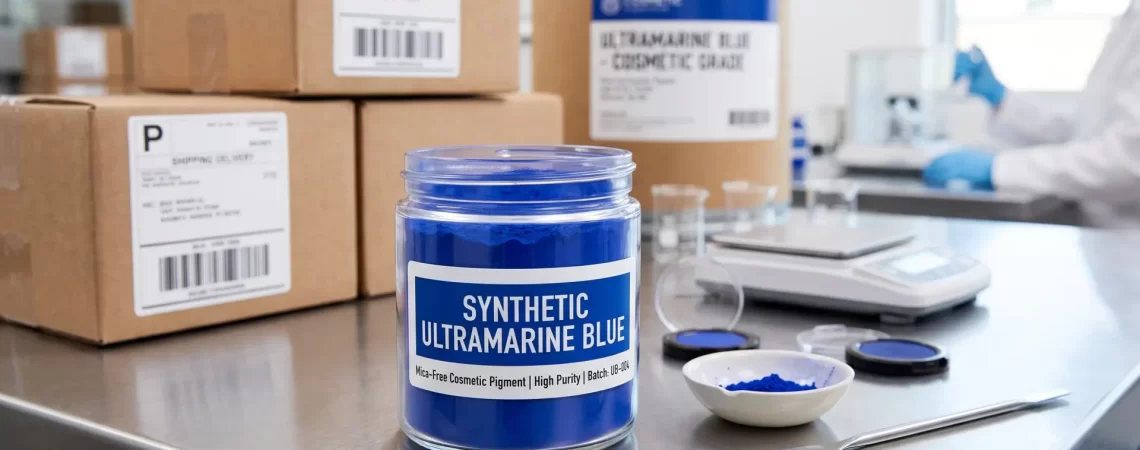
For decades, mica has been the default choice for adding shimmer and depth to everything from eyeshadow to nail polish. But in 2026, a growing number of cosmetic brands are quietly moving away from natural mica, and the reason has less to do with color performance than with what happens before the mica ever reaches a formulation lab. Roughly 60% of the world’s cosmetic-grade mica is mined in regions where child labor and unsafe working conditions have been repeatedly documented, and the traceability systems brands have built to address this have pushed the cost of certified ethical mica up by 8 to 12% in the past year alone. That combination of ethical risk and rising cost is exactly why synthetic, mica-free alternatives like ultramarine pigments are having a moment.
The Problem With Natural Mica
Natural mica is mined, not manufactured, which means its supply chain runs through small-scale, often informal mining operations that are difficult to audit consistently. Even brands that have invested heavily in responsible sourcing programs have struggled to guarantee a fully clean supply chain, and the cost of third-party verification keeps climbing. For procurement teams, this creates a real business problem: a key ingredient with unpredictable ethical exposure and an upward-trending price.
Why Synthetic Ultramarine Is Gaining Ground
Synthetic ultramarine pigments are produced entirely in a controlled industrial process, with no mining and no informal supply chain to audit. This makes them a straightforward mica-free alternative for brands that want to remove sourcing risk without compromising on color. Ultramarine blue and ultramarine violet are already used across cosmetics for eyeshadow, soap, and bath products because they deliver rich, stable color, are free of heavy metals, and do not carry the ethical baggage that has put natural mica under scrutiny. As more brands publicly commit to mica-free or fully synthetic color palettes, demand for consistent, well-documented synthetic pigments is climbing right alongside it.
What Makes a Cosmetic-Grade Ultramarine Pigment Safe and Compliant
Not every ultramarine pigment is suitable for cosmetics. Cosmetic-grade material needs to meet strict purity thresholds, carry FDA compliance for cosmetic use, and come with full documentation confirming it is free of heavy metals like lead and arsenic. Buyers should also expect batch-to-batch consistency, since even small variations in shade can force a reformulation. A pigment that checks all of these boxes gives brands a genuine, audit-free alternative to natural mica without any compromise on finished product quality.
What to Look for in a Heavy-Metal-Free Pigment Supplier
If you’re evaluating suppliers for a mica-free reformulation, look for a manufacturer that can provide a Certificate of Analysis with every batch, has a documented track record supplying the cosmetics industry, and is transparent about its production process from raw material to finished pigment. A supplier who can answer detailed questions about purity testing and regulatory compliance without hesitation is one you can build a long-term formulation around.
The shift away from natural mica is not a passing trend, it is a structural change in how the beauty industry sources color. Brands that move early to synthetic, heavy-metal-free alternatives like ultramarine pigment are positioning themselves ahead of both the ethical scrutiny and the cost pressure building around mica. Contact us to request a cosmetic-grade sample and documentation for your next reformulation.
Frequently Asked Questions (FAQs)
Is synthetic ultramarine pigment safe for cosmetic use?
Yes. Cosmetic-grade synthetic ultramarine is manufactured under controlled conditions, is free of heavy metals such as lead and arsenic, and is widely used in eyeshadow, soap, bath products, and other formulations where a non-toxic colorant for cosmetics is required.
What is the difference between natural mica and a synthetic mica-free pigment?
Natural mica is mined and depends on a supply chain that is difficult to audit for ethical and labor practices. A synthetic mica-free pigment, like ultramarine blue, is produced entirely in a factory, giving brands a fully traceable, child-labor-free mica alternative with consistent purity from batch to batch.
Is ultramarine blue pigment FDA compliant for cosmetics?
Cosmetic-grade ultramarine blue from a reputable manufacturer is produced and documented to meet FDA compliance requirements for cosmetic use, including certification that it is free of restricted heavy metals. Always request current compliance documentation from your supplier before formulating.
Why are beauty brands switching away from natural mica in 2026?
Brands are moving away from natural mica because ethical sourcing concerns, including child labor risks in mica mining regions, have made traceability both harder to guarantee and more expensive, with certified ethical mica costs rising 8 to 12% in the past year. Synthetic, heavy-metal-free alternatives remove that risk entirely.
How do I verify that a cosmetic pigment supplier is heavy-metal-free and ethically sourced?
Ask for a Certificate of Analysis with every batch, request documentation of the manufacturing process from raw material to finished pigment, and confirm the supplier has a track record serving the cosmetics industry. A sustainable pigment manufacturer should be able to answer purity and compliance questions without hesitation.
Location: A-28, Industrial Estate, Aligarh Road, Hathras – 204101, Uttar Pradesh, India
Call us: +91-9368933355