


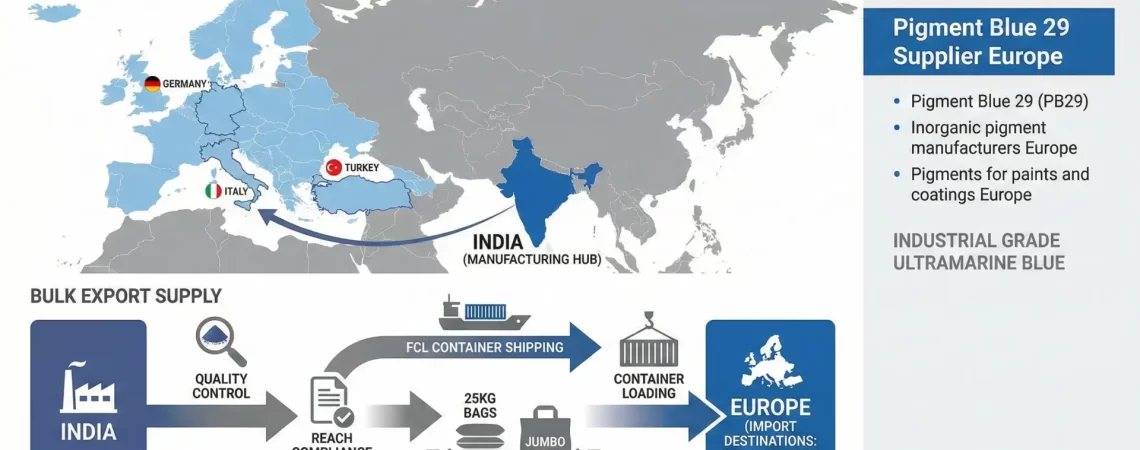
A reliable ultramarine blue pigment supplier Europe is one that offers consistent quality Pigment Blue 29, complies with international regulations, supports bulk supply, and understands industrial applications in paints, coatings, plastics, and masterbatch. European buyers should evaluate technical data, export documentation, packaging standards, and manufacturing expertise before selecting a partner.
For B2B buyers sourcing pigments for paints and coatings Europe, selecting the right supplier directly impacts color consistency, dispersion, and long-term performance.
Understanding Ultramarine Blue and Pigment Blue 29
Ultramarine Blue is an inorganic sulfur-containing sodium aluminosilicate pigment widely used in industrial applications. It is internationally classified as:
- Color Index Name: Pigment Blue 29
- Pigment Type: Inorganic
- Chemical Family: Sodium aluminum sulfosilicate
When searching for a pigment blue 29 supplier Europe, buyers typically require:
- High tinting strength
- Controlled particle size distribution
- Alkali resistance
- Compatibility with polymers and resin systems
- Heat stability for plastics
Unlike organic pigments, inorganic ultramarine pigments offer superior lightfastness and thermal stability, making them suitable for demanding applications.
Why European Industries Prefer Inorganic Pigments
Across Germany, Italy, Turkey, and other industrial hubs, demand for inorganic pigment manufacturers Europe continues to grow because of the following properties:
1. Thermal Stability
Ultramarine Blue remains stable at elevated processing temperatures used in plastics and powder coatings.
2. Lightfastness
It maintains color integrity under UV exposure, essential for exterior paints and architectural coatings.
3. Chemical Resistance
It performs well in alkaline environments, making it suitable for cement-based systems.
4. Non-Bleeding Performance
Unlike some organic alternatives, Pigment Blue 29 does not migrate in polymer systems.
For buyers of pigments for paints and coatings Europe, these characteristics are critical in ensuring long-term performance.
Applications of Ultramarine Blue in Europe
A qualified ultramarine blue pigment supplier Europe typically serves multiple industries:
Paints & Coatings
- Decorative architectural paints
- Industrial coatings
- Powder coatings
- Marine coatings
- Cement paints
Plastics & Masterbatch
- Injection molding compounds
- Film extrusion
- Rigid PVC
- PET applications
- Engineering polymers
Inks
- Offset printing inks
- Packaging inks
- Screen printing systems
When sourcing from a pigment blue 29 supplier Europe, application-specific grades are essential to ensure compatibility with resin systems.
What to Evaluate in a Pigment Blue 29 Supplier Europe
Selecting the right supplier requires technical due diligence. Consider the following:
1. Manufacturing Expertise
A supplier should have specialized production in ultramarine pigments not just trading operations.
2. Quality Documentation
Request:
- Technical Data Sheet (TDS)
- Material Safety Data Sheet (MSDS)
- REACH compliance documentation
- Heavy metal content reports
3. Export Capabilities
For European importers, confirm:
- HS Code classification
- Standard export packaging (25 kg bags / jumbo bags)
- Moisture-resistant packaging
- Container loading optimization
4. Consistency in Batch Production
Color variation between batches can cause shade mismatch in coatings. A professional ultramarine blue pigment supplier Europe should provide strict quality control data.
Pigments for Paints and Coatings Europe: Technical Requirements
Manufacturers of pigments for paints and coatings Europe must meet specific industrial standards:
- High dispersion efficiency
- Oil absorption control
- Particle size uniformity
- Low sulfur bleed
- Stability in high-pH environments
For architectural and industrial coatings, Pigment Blue 29 is preferred due to its:
- Excellent opacity in light shades
- Cost-effectiveness compared to cobalt blues
- Strong color brightness
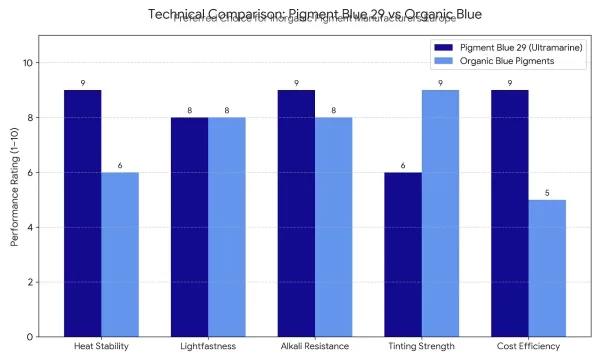
European buyers often compare inorganic ultramarine pigments with organic phthalocyanine blues. While organic pigments offer higher tint strength, ultramarine pigments deliver superior heat stability.
Export-Focused Supply Model for Europe
When sourcing from global producers, European buyers expect:
- Container-level supply
- On-time shipping schedules
- Export documentation accuracy
- Flexible MOQ options
- Compliance with EU standards
A structured supply chain reduces delays and maintains production continuity.
Key export considerations include:
- Proper palletization
- Moisture barrier liners
- Batch traceability
- Pre-shipment inspection
Market Demand for Inorganic Pigment Manufacturers Europe
Europe’s pigment market continues to demand:
- Eco-conscious inorganic pigments
- Stable supply chains
- Price consistency
- Bulk procurement agreements
While there are several inorganic pigment manufacturers Europe, global exporters from Asia, especially India, have strengthened their presence due to:
- Competitive pricing
- Manufacturing specialization
- Export compliance infrastructure
This has made sourcing internationally a viable option for European paint and plastic manufacturers.
Technical Comparison: Ultramarine vs Other Blue Pigments
| Parameter | Ultramarine Blue (PB29) | Organic Blue Pigments |
| Heat Stability | High | Moderate |
| Lightfastness | Excellent | Good |
| Alkali Resistance | Excellent | Limited |
| Tinting Strength | Moderate | High |
| Cost | Economical | Higher |
For coatings and plastics requiring thermal stability, Pigment Blue 29 is often preferred.
How to Structure Procurement for European Buyers
If you are sourcing from an ultramarine blue pigment supplier Europe, follow this procurement framework:
- Define application (paint, plastic, ink)
- Specify shade and tint strength
- Request TDS and sample
- Conduct dispersion trial
- Verify compliance documentation
- Confirm packaging and shipping method
- Establish long-term contract pricing
This reduces risk and ensures supplier reliability.
Regulatory Considerations in Europe
European importers must verify:
- REACH compliance
- Heavy metal limits
- Environmental standards
- Labeling requirements
A professional pigment blue 29 supplier Europe should proactively provide regulatory documentation to simplify import clearance.
Why Consistency Matters in Pigments for Paints and Coatings Europe
Inconsistent pigment supply can lead to:
- Shade variation
- Rework costs
- Production downtime
- Customer complaints
Industrial buyers therefore prioritize long-term partnerships with suppliers offering:
- Stable quality
- Technical support
- Batch reproducibility
For pigments for paints and coatings Europe, performance predictability is more important than marginal price differences.
Bulk Packaging & Logistics for European Markets
Standard export packaging includes:
- 25 kg laminated HDPE bags
- 500–1000 kg jumbo bags
- Palletized and shrink-wrapped loads
Shipping modes:
- Full Container Load (FCL)
- Less than Container Load (LCL)
Moisture control is critical because ultramarine pigments are sensitive to prolonged humidity exposure.
Future Outlook for Ultramarine Pigments in Europe
Demand for inorganic pigments is expected to grow due to:
- Sustainable building materials
- Infrastructure projects
- Expansion of plastics manufacturing
- Increased regulatory scrutiny on heavy metals
As a result, demand for a reliable ultramarine blue pigment supplier Europe and inorganic pigment manufacturers Europe will continue rising.
FAQs – Ultramarine Blue Pigment Supplier Europe
1. What is Pigment Blue 29?
Pigment Blue 29 is an inorganic ultramarine pigment used in paints, plastics, inks, and coatings for its lightfastness and thermal stability.
2. How do I choose a pigment blue 29 supplier Europe?
Evaluate manufacturing expertise, export documentation, compliance certificates, packaging quality, and batch consistency.
3. Are inorganic pigment manufacturers Europe better than organic pigment suppliers?
It depends on application. For heat resistance and alkali stability, inorganic pigments like ultramarine are preferred.
4. Are ultramarine pigments suitable for exterior paints?
Yes, due to their strong lightfastness and weather resistance.
5. What industries use pigments for paints and coatings Europe?
Architectural coatings, industrial coatings, marine coatings, powder coatings, and automotive refinishing sectors.
6. Is Pigment Blue 29 safe for plastic masterbatch?
Yes, when properly formulated, it performs well in plastic masterbatch applications.
7. What packaging is standard for export to Europe?
Typically 25 kg bags or jumbo bags with palletized container loading.
8. Does ultramarine blue bleed in plastic?
No, it is non-bleeding and stable in most polymer systems.
9. What compliance documents should suppliers provide?
REACH compliance, MSDS, TDS, heavy metal reports, and export documentation.
10. Can European buyers source from global manufacturers?
Yes, many European buyers import from specialized global exporters offering competitive pricing and bulk supply.
Final Guidance
Choosing the right ultramarine blue pigment supplier Europe requires technical evaluation, regulatory verification, and supply chain reliability. For manufacturers sourcing pigment blue 29 supplier Europe, especially for pigments for paints and coatings Europe, prioritizing consistency, compliance, and export experience ensures long-term operational success.
A structured procurement strategy combined with verified inorganic pigment manufacturers Europe helps minimize risk and maximize product performance.