


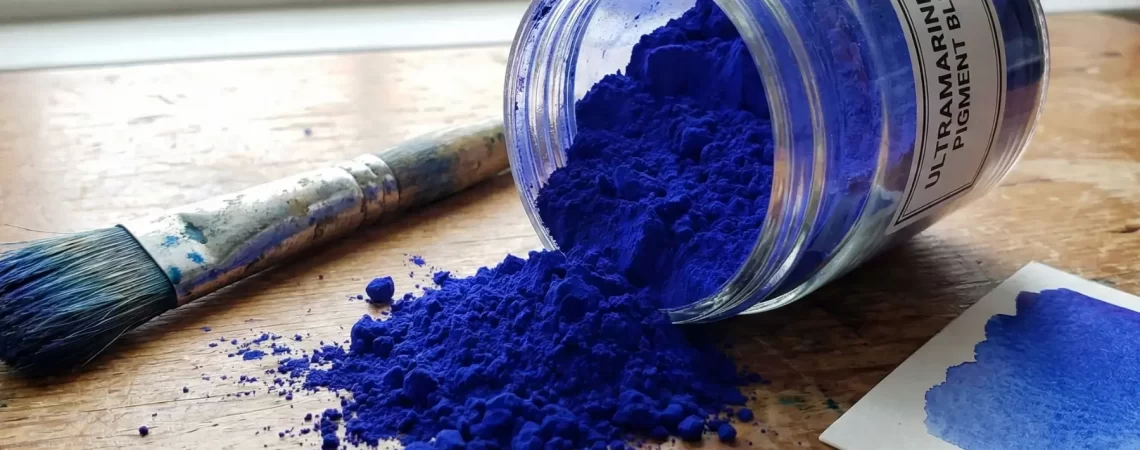
Industrial Demand for Ultramarine Blue in Global Markets
Ultramarine Blue, internationally classified as Pigment Blue 29 manufacturer, remains one of the most widely used inorganic pigments for industrial applications. Its consistent blue shade, excellent thermal stability, and cost efficiency make it a preferred choice across plastic masterbatch manufacturing, polymer compounding, paints & coatings, inks, rubber, and ceramic industries.
India has emerged as a reliable global source for Ultramarine Blue due to its strong chemical manufacturing base, scalable production capacity, and export-oriented pigment manufacturers. Today, an experienced Ultramarine Blue manufacturer in India is not only expected to supply color but also deliver batch-to-batch consistency, export-grade quality, regulatory compliance, and bulk supply reliability.
This guide is written from a manufacturer & exporter’s perspective to help procurement teams, R&D managers, and bulk importers understand Pigment Blue 29, its properties, industrial suitability, and how to select the right pigment export company in India.
What is Ultramarine Blue / Pigment Blue 29?
Ultramarine Blue, also known as Pigment Blue 29 (PB29), is a synthetic inorganic blue pigment produced using a controlled calcination process. Chemically, it is a sodium alumino-silicate polysulfide, engineered to deliver a stable blue hue under demanding industrial processing conditions.
Unlike organic blue pigments, Ultramarine Blue offers:
- High heat resistance
- Excellent dispersion in polymers
- Good light fastness for indoor applications
- Cost-effective coloration for bulk usage
Because of these characteristics, Pigment Blue 29 manufacturers primarily supply this pigment to high-volume industrial segments rather than decorative or consumer applications.
Chemical Composition & Key Properties of Pigment Blue 29
A reliable inorganic pigment manufacturer focuses not just on color strength but also on functional performance.
Chemical Composition
- Base: Sodium alumino-silicate
- Sulfur content responsible for blue coloration
- Controlled particle size distribution
Key Industrial Properties
- Thermal Stability: Suitable for plastic processing temperatures up to ~300°C
- Chemical Resistance: Stable in alkaline environments
- Opacity & Tinting Strength: Balanced for masterbatch and compound applications
- Non-Bleeding: Does not migrate in polymer matrices
- Low Oil Absorption: Ensures better processing behavior
These properties make Pigment Blue 29 especially suitable as a pigment for plastic masterbatch, where processing stability and dispersion are critical.
Ultramarine Blue Manufacturing Process (Export-Compliant Overview)
A professional Ultramarine Blue manufacturer in India follows a standardized, export-compliant manufacturing approach to ensure consistency and scalability.
High-Level Manufacturing Stages
- Raw Material Selection
- Alumino-silicate minerals
- Sulfur compounds
- Sodium-based fluxes
- Controlled Calcination
- High-temperature kiln processing
- Precise atmosphere control for color development
- Cooling & Washing
- Removal of soluble salts
- Stabilization of pigment structure
- Grinding & Classification
- Particle size optimization
- Application-specific grades
- Quality Control & Batch Testing
- Shade consistency
- Heat resistance
- Dispersion performance
Export-oriented manufacturers ensure documented QC systems, enabling consistent supply to international buyers across multiple shipments.
Applications of Ultramarine Blue Across Industries
Ultramarine Blue for Plastic Masterbatch
Plastic masterbatch producers rely heavily on Pigment Blue 29 for:
- Polyolefins (PP, PE)
- PVC and engineering plastics
- Film and injection molding applications
Its thermal stability and non-bleeding nature make Ultramarine Blue one of the most trusted pigments for plastics, especially in high-volume masterbatch production.
Ultramarine Blue in Plastics & Polymers
Beyond masterbatch, Ultramarine Blue is widely used directly in:
- Polymer compounds
- Recycled plastics
- Rigid and flexible plastic products
An experienced ultramarine pigment supplier offers custom particle size grades to improve dispersion and reduce processing issues.
Ultramarine Blue in Paints & Coatings
Paint manufacturers use Ultramarine Blue for:
- Industrial coatings
- Architectural paints (interior)
- Primers and specialty formulations
Its alkali resistance and color stability make it suitable for controlled paint systems where cost efficiency matters.
Ultramarine Blue for Inks, Rubber & Ceramics
Additional industrial applications include:
- Printing inks
- Rubber products
- Ceramic glazing formulations
In these sectors, consistency in shade and particle size from a Pigment Blue 29 manufacturer is more critical than extreme lightfastness.
Why Choose an Indian Manufacturer for Ultramarine Blue?
India has become a preferred sourcing destination for Ultramarine Blue due to several structural advantages.
Cost Efficiency Without Quality Compromise
Indian manufacturers combine:
- Local raw material availability
- Optimized energy usage
- Scalable production infrastructure
This enables competitive pricing for bulk buyers without sacrificing pigment performance.
Bulk Production Capability
A reliable ultramarine blue manufacturer in India supports:
- High-volume orders
- Long-term supply contracts
- Repeat export shipments
This is critical for plastic masterbatch and polymer processors requiring uninterrupted supply.
Global Compliance & Quality Systems
Export-focused Indian manufacturers follow:
- Documented quality control systems
- Consistent batch testing protocols
- Application-specific grade development
These practices position India as a trusted pigment export company for global markets.
Proven Export Experience
India exports Ultramarine Blue to:
- UAE & Middle East
- Europe (Germany, Italy, Turkey)
- Southeast Asia (Vietnam, Indonesia)
- Africa (Nigeria, Kenya)
An established exporter understands logistics, documentation, and buyer expectations across regions.
Export & Bulk Supply Information
Packaging Options for Export
A professional pigment export company in India offers:
- 25 kg HDPE or paper bags
- Jumbo bags for bulk shipments
- Customized packaging on request
Packaging is designed to prevent moisture ingress and contamination during transit.
Quality Standards & Consistency
Export buyers expect:
- Shade consistency across batches
- Controlled particle size
- Stable performance across applications
Leading inorganic pigment manufacturers maintain strict batch-to-batch control to meet these expectations.
Typical Export Markets
Indian Ultramarine Blue is widely supplied to:
- Domestic Indian manufacturers
- UAE & Saudi Arabia
- European industrial buyers
- Asian polymer processors
- African bulk importers
This geographic diversity reflects India’s growing reliability as a pigment sourcing hub.
How to Select the Right Ultramarine Blue Supplier
Technical Support Capability
A credible supplier provides:
- Application guidance
- Dispersion support
- Grade selection assistance
This is especially important for plastic masterbatch manufacturers.
Quality Control & Documentation
Choose a supplier that offers:
- Technical data sheets
- Batch consistency assurance
- Export-ready documentation
Export Documentation & Logistics
An experienced pigment export company India manages:
- HS code classification
- Export packing lists
- Shipping coordination
This reduces procurement risk for overseas buyers.
Customization & Long-Term Supply
Top manufacturers support:
- Customized grades
- Consistent long-term supply
- Scalable order volumes
These capabilities differentiate a true Pigment Blue 29 manufacturer from traders.
FAQs – Ultramarine Blue / Pigment Blue 29
Q1. What industries commonly use Pigment Blue 29?
Pigment Blue 29 is widely used in plastic masterbatch, polymer compounding, paints & coatings, inks, rubber, and ceramic applications where inorganic pigment stability is required.
Q2. Is Ultramarine Blue suitable for plastic masterbatch manufacturing?
Yes. Ultramarine Blue offers excellent heat resistance, non-bleeding properties, and good dispersion, making it highly suitable as a pigment for plastic masterbatch production.
Q3. How is Ultramarine Blue different from organic blue pigments?
Ultramarine Blue is an inorganic pigment with higher thermal stability and better cost efficiency, whereas organic blue pigments offer higher tinting strength but lower heat resistance.
Q4. What packaging options are available for export orders?
Export packaging typically includes 25 kg bags, jumbo bags, and customized packaging depending on shipment volume and buyer requirements.
Q5. What is the typical MOQ for Ultramarine Blue exports from India?
MOQ varies by manufacturer and grade but is generally structured to support bulk industrial buyers rather than small retail quantities.
Q6. Do Indian manufacturers export Ultramarine Blue globally?
Yes. Established Indian manufacturers export Ultramarine Blue to the Middle East, Europe, Asia, and Africa, supported by strong logistics and documentation systems.
Q7. How do I choose a reliable Ultramarine Blue supplier in India?
Select a supplier with proven manufacturing capability, quality control systems, export experience, and technical support rather than relying on traders.
Final Note from the Manufacturer
For global buyers seeking consistent quality, bulk supply, and export reliability, partnering with an experienced Ultramarine Blue / Pigment Blue 29 manufacturer in India provides both technical and commercial advantages.
When selected correctly, an Indian inorganic pigment manufacturer becomes a long-term partner supporting scalable production, application performance, and global supply continuity.